Little Kingdoms. An A-Z of Early Medieval Britain
Cafe-scientifique
- Date
- 3 Dec 2025
- Start time
- 7:30 PM
- Venue
- City Screen Basement Bar
- Speaker
- Alex Harvey, Author and Lecturer

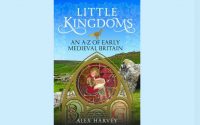
Little Kingdoms. An A-Z of Early Medieval Britain
Alex Harvey, author and lecturer
Before England, Wales, and Scotland were created, before Alfred the Great and the Great Viking Army, before even a raid on Lindisfarne, the kingdoms that made up the British Isles were a squabbling, kaleidoscopic mosaic of realities. Some centred their livelihood around rivers, others dug deep to harvest resources from the ground beneath them. There were kingdoms that straddled the sea, others divided by marshes, and some that stuck to rugged mountainsides, or even caves. All these places, remembered now in place-names, artefacts, and obscure chronicles, have become obscured and forgotten, in many cases lost entirely. Little Kingdoms peels back the veil on sixty-two unique realms, listed alphabetically like a travelogue, showcasing the most diverse corners of Early Medieval England, sandwiched in that tantalising gap between the Roman and Viking periods. By using a mixture of disciplines, folklore, and a little imagination, all sixty-two (and many more besides) are brought to life through careful detective work, inventive illustrations, and detailed maps, highlighting the multicultural people of this island and their many, many origins.
Imagine a time when Harrow-on-the-Hill was crowned with a pagan temple, when the commercial heart of London beat not in the City but at the Aldwych, when giant zombies patrolled Strathclyde, and when the Fenlands of Cambridgeshire were a single swamp and the home of eel-wranglers, egret-catchers, and bog-miners. This is the world to which Alex Harvey transports us in this powerfully evocative and clever account of Britain in the centuries after the Roman withdrawal. Made up of more than sixty micro-histories of the places which flourished between the fifth and tenth centuries, his book is both a time machine and an A to Z of a lost age. But it is much more besides. By starting with the little kingdoms, Alex Harvey reverses the standard narrative which interprets Dark Age Britain through the lens of what it was to become. You will never see the Anglo-Saxon world in the same light and you will probably never again describe it as Anglo-Saxon but instead as a multiplicity of overlapping cultures, languages, and myths of origin. Martyn Rady, Masaryk Professor Emeritus of Central European History at UCL and author of The Middle Kingdoms: A New History of Central Europe.
Doors open 7pm for a 7.30pm event start:
We are holding this free Cafe Scientifique session on Wednesday 3 December 2025 from 7pm, talk starting at 7.30pm at City Screen Basement, Coney Street, YO1 9QL Lift access available. No Booking necessary.
Please buy a drink in the basement bar, take your seats and be ready for a presentation, discussion and the chance to buy a copy of the book which will be published on 30th November by “Pen and Sword Books”.
Member’s report:
Alex Harvey cites sixty-five little kingdoms in his book, but he spoke only of ten (with a bonus possible eleventh) ‘increasingly obscure’ kingdoms of Yorkshire in this lecture. He impressed upon us the need to question the concept of ‘kingdom’, stressing that in this period – the 5th to 8th centuries CE – the names which occur in sparse historic records do not refer to a geopolitical entity with a recognisable ruler and defined boundaries. Such areas as can be identified overlap – did people travel through Deira when heading for York, or was York in, and part of Deira? A subsidiary ‘little kingdom’ or one in its own right? The source of the idea of a kingdom might be geographic – an area of resource such as a fertile valley, or river port – or it might have been a significant landscape feature such as Ingleborough, or a coalition around an important person. The ‘kingdom’ of Durham may have been the people who travelled with the peripatetic coffin of St Cuthbert prior to its permanent housing in the city of Durham. The sources, which include hoards, place names, genealogies and the Doomsday Book provide indicators, but tell us nothing of how the people living there defined themselves – by allegiance to a place, one person or other people? To family, tribe or homeland? This question, with the ancillary one about the meaning of the concept of ‘kingdom’ remains, giving much food for thought.
Felicity Hurst
 Follow us on Twitter
 Like us on Facebook
 Connect to us on LinkedIn
 Follow us on Bluesky