Conservation Engineering: Philosophy, Principles and Practice
Lectures

Conservation Engineering: Philosophy, Principles and Practice
Gez Pegram, Director, Mason Clark Associates
This talk by Engineer Gez Pegram is intended to give a brief introduction to the practice of Conservation Engineering, setting out the philosophy and principles underpinning the art, with examples drawn from Gez’ work in York, Yorkshire and more widely across the UK.
Gez is a structural engineer, living and working in York since 1999. As a Director and Partner for Mason Clark Associates, he is responsible for their York and Leeds teams. He is a Fellow of both Institutions of Civil and Structural Engineers, and an Engineer Accredited in Building Conservation (CARE), sitting on the CARE Panel. Gez has over thirty years of experience on a diverse and challenging range of construction projects. These include civil and structural engineering schemes, both new-build and within the heritage sector. His passion is for historic structures and how conservation engineering can contribute to our built environment and sustainability.
Gez was Project Engineer for the refurbishment of Grade I Listed Bishopthorpe Palace, the re-roofing of the Mansion House at Grade I Listed Wentworth Woodhouse, and is currently project lead for the £40M HLF funded works at Grade II* Hull Maritime Museum and Dockyards. He heads the engineering team engaged to conserve York City Walls and has been recently appointed to Southwell Minster.
He is an advocate for traditional methods used in contemporary settings, together with innovative techniques used to conserve older buildings. These include monitoring, investigation, repair, strengthening and sensitive intervention to give a sustainable future and re-purposing to our heritage assets. Gez is one of the course leaders for the Building Conservation Masterclass in the Structural Repair of Historic Buildings at West Dean College. His presentations include the IHBC Summer School 2019 (Heritage, Risk & Resilience; confronting conservation calamities). He won the 2025 Clancy Prize for his conservation article “Care of Churches”.
7pm in the Tempest Anderson Lecture Theatre in the Yorkshire Museum on Tuesday 28 October.
PLEASE NOTE ENTRANCE WILL BE FROM THE MUSEUM GARDENS ENTRANCE FROM EXHIBITION SQUARE at the side of King’s Manor from 6.30pm. As “Echoes of Yorkshire” sound and light installation is taking place in Museum Gardens entrance will be through the back door of the Yorkshire Museum – where there is a lift to the main floor for the Tempest Anderson hall.
Member’s report:
Background
Gez Pegram is a structural engineer, based in York, and responsible for MCA’s York and Leeds teams. He is a Fellow of both Institutions of Civil and Structural Engineers, and an Engineer Accredited in Building Conservation (CARE), sitting on the CARE Panel. He has over thirty years of experience in a diverse and challenging range of construction projects. These include civil and structural engineering schemes, both new-build and within the heritage sector. His passion is for historic structures and how conservation engineering can contribute to our built environment and sustainability.
Gez was Project Engineer for the refurbishment of Grade I Listed Bishopthorpe Palace, the re-roofing of the Mansion House at Grade I Listed Wentworth Woodhouse, and is currently project lead for the £40M HLF funded works at Grade II* Hull Maritime Museum and Dockyards. He heads the engineering team engaged to conserve York City Walls and has been recently appointed to Southwell Minster.
General Approach & Philosophy
GP is an advocate for traditional methods used in contemporary settings, together with innovative techniques used to conserve older buildings. The latter include monitoring, investigation, repair, strengthening and sensitive intervention to give a sustainable future and re-purposing to our heritage assets.
GP’s main considerations in conservation engineering include: minimum possible intervention; protection rather than restoration; regular maintenance (particularly roofs); not to destroy original features; justifying doing nothing for individual elements wherever possible. Ideally, the original features should be recoverable if better techniques become available in the future.
The overarching philosophy is that of ICOMOS (International Council on Monuments and Sites) dedicated to the conservation and preservation of cultural heritage worldwide. In England, the preservation of culturally important buildings is undertaken by Historic England – they have identified and listed over 370,000 buildings that merit protection. Of these, only 2.5% are rated Grade 1 (eg York Minster, Yorkshire Museum, Kings Manor), The next category is Grade 2* at 5.8% (eg Bedern Hall; many buildings in the Shambles and other old buildings within York City Walls); The final category is Grade 2 at 91.7%. – these buildings are deemed less important overall but contain special features that merit protection.
UK law in this area is complex eg The Planning (Listed Buildings & Conservation Areas) Act 1996.
Examples
The lecture was wide ranging and with many examples and photographs. These illustrated many philosophical considerations and many examples of the lecturer’s varied work and included –
* Lime kilns at Smardale Gill.
* Spurn Point gun emplacement.
* Grade 2*. Damage caused by a large vehicle hitting the corner of 49 Goodramgate, York.
* Damage by a large tree to St Cuthbert’s Church, York.
* Fire damage to the Abbey wall between the York Art Gallery and Bootham.
* Illegal demoilition and replacement of The Punch Bowl, a listed pub in Hurst Green, Lancashire.
* Grade 1. Wentworth Woodhouse.
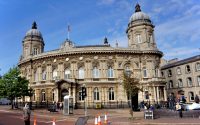
* Grade 2* . Maritime Museum, Hull.
Some of the above projects, and others, feature on the following website (with photographs)
https://www.masonclark.co.uk/services/conservation-engineering
 Follow us on Twitter
 Like us on Facebook
 Connect to us on LinkedIn
 Follow us on Bluesky