Crawling to an understanding of early events in Parkinson’s.
Lectures
- Date
- 24 Jun 2025
- Start time
- 7:00 PM
- Venue
- Tempest Anderson Hall
- Speaker
- Professor Sean Sweeney, University of York

Crawling to an understanding of early events in Parkinson’s.
Professor Sean Sweeney, Department of Biology, University of York
The movement disorder Parkinson’s is the result of loss of neurons in the brain that secrete the molecule dopamine and often occurs with increasing age. Diagnosis will unfortunately occur by the time that 30-50% of these critical neurons have already died. Events occurring in dopamine secreting neurons that pre-dispose neurons to death are not presently clear. How do we identify mechanisms driving neuronal death? One strategy to try to understand early events prior to neuronal cell death is by examining neurons from brains bearing inherited mutations that cause a disposition to Parkinson’s (genetic ‘risk factors’). This approach should allow us to detect early differences between affected and normal neurons.
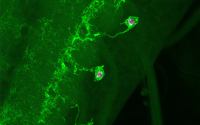
In my talk I will introduce our approach to using the fruit fly Drosophila melanogaster to predispose neurons to Parkinson’s outcomes. The fruit fly has been critical in helping us understand mechanisms driving Parkinson’s and in our current study they allow us to manipulate the dopamine secreting neurons in the larval stage of the fly brain while studying behaviour. Using this system we can also visualise events in the neurons to understand how changes caused by genetic risk factors result in changes in neuronal activity. The use of flies allows us to feed the animals experimental drugs to reverse these changes and we are currently identifying new drug approaches to treating Parkinson’s.
Biography:
Harking from Ayrshire originally, I studied for a degree in Biology and Chemistry at Staffordshire University. After a period as a lab research technician in Leicester, I gained an excitement for lab bench-based research, moving on to study for a PhD in Genetics at Cambridge. My PhD saw me develop methods for silencing individual neurons in Drosophila to allow a mapping of neurons to define their roles in specific behaviours. I enjoyed a 4 year fellowship at the University of California, San Francisco where I studied the cell biology of synapses in Drosophila and was recruited to the University of York in 2004. While working in York I have made contributions, using fruit flies, to understanding mechanisms driving Parkinson’s, Frontotemporal Dementia, lysosomal storage disease and motorneuron disease. I was promoted to Professor in 2022.
7pm in the Tempest Anderson Lecture Theatre in the Yorkshire Museum on Tuesday 24 June 2025.
Please note that the 2025 YPS AGM will be held at 6.30pm this evening.
YPS Members free, non members £5.
Member’s report:
Parkinson’s disease is a condition known to many of us, with nearly 150 thousand sufferers in the UK alone with around 15 thousand new cases diagnosed per year. The symptoms are familiar, including muscle tremor, stiffness and impaired balance and coordination. This is a disease of our nervous system and the aim of our lecturer, Prof Sean Sweeney, was to really educate us on what we now know about the underlying causes of the disease and ultimately how his research might provide routes to slow or prevent the condition. The type of neurodegeneration seen in Parkinson’s is well known and is marked by the loss of particular nerve cells called dopaminergic neurons. The disease appears to have multiple causes, some rare cases are genetic but most are not genetically linked, though nearly all cases appear to relate to the function of mitochondria. These are little factories in all our cells that generate the energy the cell needs to do its business. Dopaminergic neurons are particular energy hungry. Hence, if mitochondria are being damaged and started failing, the dopaminergic neurones are some of the first to suffer. Sean mentioned an early clue to this mechanism, when a group of people in San Jose, California took a heroin analogue called MPTP. This chemical is highly toxic to mitochondria and they quickly presented with a disease with the same symptoms of Parkinson’s, only this developed in days and weeks rather than years.
So mitochondrial health is at the route of this condition and Sean then told us something about the life cycle of this fascinating sub-cellular component, which we generally call an organelle. Mitochondria are naturally turned-over, like the parts in any factory, and new mitochondria replace old ones. The process of mitophagy is when the mitochondria are effectively ‘eaten’ by another specialised organelle in the cell called the lysosome – often likened to a rubbish disposal unit. This process is important for clearing damaged mitochondria to keep the factory working efficiently, and two human genes linked to Parkinson’s, namely Parkin and PINK1 are important for mitophagy to occur properly.
Sean then switched to telling us about his experimental system for studying Parkinson’s, which is the fruit fly Drosophila melanogaster, and acknowledged the work of his predecessor and collaborator in York Biology, Dr. Chris Elliot, who set up this model of Parkinson’s disease in the department. In this system Sean and his colleagues can look directly at the function of the dopamine secreting neurons which we know are important in Parkinson’s and manipulate the flies either genetically or chemically and see how that alters fly behaviour, including how they move, hence the ‘crawling’ part of his talk title. This allows study of the activity of the neurons prior to them degenerating. His recent research is focussing on the function of the rubbish disposal unit, as some other mutations linked to Parkinson’s are known to alter the activity of the lysosome. These mutations in a gene called LRRK2 cause aberrant movement of calcium ions (Ca2+) from the lysosome, resulting ultimately in reduced mitochondrial function and potentially overactive dopaminergic neurons. What is important about this discovery is that the protein that moves the Ca2+ is known and could be inhibited by small molecule drugs, providing some hope of treatments for Parkinson’s in the future and illustrating how this humble fruit fly can help us understand an important human condition.
Gavin Thomas
 Follow us on Twitter
 Like us on Facebook
 Connect to us on LinkedIn
 Follow us on Bluesky