Does citizen science have a role in protecting tree and plant health?
Lectures
- Date
- 11 Nov 2025
- Start time
- 7:00 PM
- Venue
- Tempest Anderson Hall
- Speaker
- Dr Charles Lane

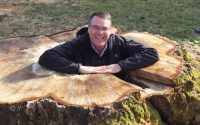
Does citizen science have a role in protecting tree and plant health?
Dr Charles Lane, FRSB, Senior Plant Health Professional Fera Science Ltd, York
Charles has spent the past 30 years identifying fungal plant diseases both indigenous and alien to the UK. He leads Fera’s work on developing capability and capacity in stakeholders, NGOs and members of the public about plant health and biosecurity. He is a Fellow of the Royal Society of Biology and is Royal Society Biology Senior Plant Health Professional as well as a Professional Member of the Arboricultural Association.
Charles is Fera’s lead on citizen science projects such as Observatree, OPAL and The International Plant Sentinel Network (IPSN). He is also responsible for leading work for Defra and the Government Office of Science on ‘Inspiring the Next Generation of Plant Health Scientists’ working with organisations such as the Royal Society Biology, Gatsby funded Science and Plants for Schools (SAPS) and the University York Science Education Group.
7pm in the Tempest Anderson Lecture Theatre in the Yorkshire Museum on Tuesday 11th November.
YPS Members and students free, non members £5.
Member’s review:
Citizen Science is scientific work undertaken by members of the general public, often in collaboration with or under the direction of professional scientists and scientific institutions. It incudes several potential activities, specifically data collection and evidence gathering with capability and capacity building. For example, it helped identify Ash Die Back, first discovered in 2012. Only 5% to 10% of ash trees can tolerate Ash Die Back. The number of new pests and diseases identified for trees since 1970 has increased each year with a significant increase since 2002.
The International Plant Sentinel Network (IPSN) supports biosecurity and plant health through botanic gardens and arboreta, with the aim of monitoring plant health providing an early warning system for new and emerging pest and pathogen threats. There are 25 members in the UK. Its activities include surveillance, capacity building and training, connection creation, research and development and information resources. Surveillance includes general surveillance for any pest or disease and targeted surveillance for priority organisms. Connection creation includes the UK Garden Sentinel Network (UKGSN) which is a collaborative initiative aimed at increasing understanding and engagement in plant health surveillance in gardens through volunteers/horticultural student groups.
There is a targeted surveillance of Holm Oak Pests which is particularly significant as Holm Oak is promoted as a climate resilience species, widely planted in the UK. Last year Holm Oak Bark Scale was detected in a London cemetery causing noticeable decline in the oaks, so the intention in now is to establish a baseline for the presence and spread of pest species.
‘Observatree’ is a government strategy for monitoring tree health using citizen science with the aims of keeping pests out, eradicating them before spread, controlling and managing. The earlier new arrivals are spotted, the more effective eradication is likely to be. ‘Observatree’ has a priority list of pests and diseases, some of which are not thought to be in the UK. The vision for 2023-2028 is to protect Great Britain’s plants through a strong partnership of Government, industry and the public, working together to reduce and manage risks posed by plant pests and pathogens, and facilitate safe trade.
Citizen Science has challenges and rewards. The challenges include ‘Big’ data sets, verification, value, integration into statutory surveillance data and sustained long term commitment; the rewards are a large network of hard working, passionate, highly engaged people, training and interactions that are inspiring and fun, raised awareness and understanding of plant health and biosecurity.
Jon Coulson
 Follow us on Twitter
 Like us on Facebook
 Connect to us on LinkedIn
 Follow us on Bluesky