The Buildings Archaeologist – Discovering the Secrets of Britain’s Ancient Buildings
Lectures
- Date
- 20 Oct 2026
- Start time
- 7:00 PM
- Venue
- Tempest Anderson Hall
- Speaker
- Dr James Wright

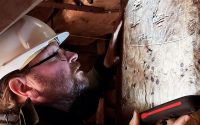
The Buildings Archaeologist – Discovering the Secrets of Britain’s Ancient Buildings
Dr James Wright, FSA
Visit any settlement in the land and there will be ancient buildings hidden in plain sight. Behind a Victorian façade is a Tudor house. Underneath a Georgian frontage is a mediaeval cottage. What is now a modern farm may once have been a castle. We know relatively little about the ancient buildings that surround us, yet buildings archaeology can offer us so many clues for discovering the secrets of hidden historic houses.
This talk is based on a new book of the same name. It looks at the ways in which ancient buildings have been studied and conserved, the puzzling ways that some buildings became listed whereas others were overlooked, and how we can really understand the age and development of a structure. With over a quarter of a century of field experience, James Wright uses case studies drawn from his career to explain the fascinating, enigmatic, and surprising world of The Buildings Archaeologist.
Biography: Dr James Wright FSA (Triskele Heritage), is an award-winning buildings archaeologist. He has over two decades professional experience of ferreting around in people’s cellars, hunting through their attics and digging up their gardens. He hopes to find meaningful truths about how folk lived their lives in the past. He is the author of the Historic Building Mythbusting (2024) and The Buildings Archaeologist (2026) which were both released via The History Press.
7pm in the Tempest Anderson Lecture Theatre in the Yorkshire Museum on TUESDAY 20 October 2026.
YPS Members and students free, non members £5. (No advance booking; come along on the evening and pay on the door.)
Member’s report:
Undaunted by a cold, wet and windy evening there was a large gathering in the lecture theatre to welcome Dr James Wright for his 11th appearance on a two-month 30 date tour of English towns and cities promoting his book ‘The Buildings Archaeologist’ (2026), a personal account of ‘reading ancient buildings’ during a 30-year career. Although the lecture was rooted in the structure of a book which is full of detail including archival research, dendrochronology and building survey the speaker kept admirably to the time limit without making it feel like he was needing to rush.
Under the heading of ‘A Life in Ruins’ he first spoke briefly about how he came to be interested in archaeology as a child including watching ‘Time Team’ and eventually studying archaeology at the University of Nottingham. He then described a varied career particularly as a buildings archaeologist and leading to the founding of Triskele Heritage in 2016 an archaeological consultancy and lecturing business located in Nottingham.
In a section entitled ‘Antiquarian to Archaeologist’ he looked at ways in which knowledge was gained about ‘ancient buildings’ particularly the work of 18th and 19th century antiquarians through to the ‘listing of buildings’ in the last century which continues to this day. He did however make it abundantly clear that the quality of the information in these listings is varied and often should not be taken at face value as many buildings have not been examined in detail. To make the point he used as an example from his detailed ‘Historic Buildings Assessment’ of a ‘pre-eighteenth century, single-storey cruck-framed cottage, which was then heightened and modestly gentrified in the late eighteenth century’ at 45 Cliff Street Whitby. His report led to the cottage being given a Grade II listing: https://historicengland.org.uk/listing/the-list/list-entry/1494480
At the very beginning of his presentation Dr Wright described his book as the first since Richard Morriss’ ‘The Archaeology of Buildings’ (2000) to deal exclusively with the subject. In his book however he writes ‘My intention is not to try and supersede or to replace Morriss’ fine book…Instead, I wish to complement and build upon its success.’ As a possessor of both books, I certainly agree to that statement.
Jeff Taylor
 Follow us on Twitter
 Like us on Facebook
 Follow us on Bluesky